
A practical plan for keeping your home safe and functional on the days you have almost nothing left to give.
On low-energy days, I don’t ask, “How can I keep the house clean?”
I ask, “What does my household need to stay safe and functional today?“
My answer is a zero-battery system: a deliberately lower standard of homemaking that I use when I don’t have the energy to run my usual routine.
In the past, not meeting a high-level of cleanliness would have felt like a personal failure. But last year, after listening to KC Davis’s book, How to Keep House While Drowning, I finally began to accept that my mental health really needed to be prioritized over housework.
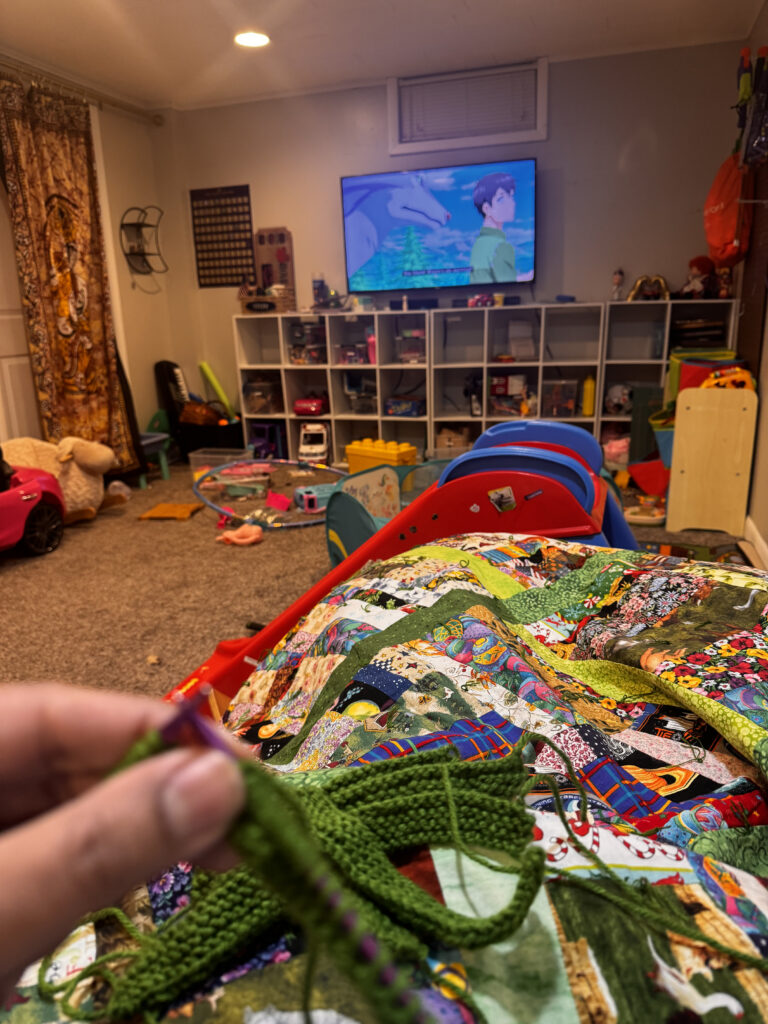
Between raising a toddler, and an eight year old, trying to start a business, being a SAHM, and being a 40+ year old with a bunch of health issues, of course my daily energy levels would fluctuate.
So instead of fighting against my energy, I decided to work with it.
If you too are currently running on empty, here is how to break down your day, lower the bar, and keep your household functioning without burning out.
1. Categorizing Chores: Essential vs. Optional
When your energy is low, or you’re overwhelmed or overstimulated, it can feel like everything is important and needs to be done right now.
I borrowed the shape of Maslow’s hierarchy as a thought experiment: if everything cannot happen today, what does my household actually need first? Try running your to-do list through it too, it may help you cut through the noise too.
Inspired by Maslow’s hierarchy of needs, I ended up creating my own hierarchy for low-energy homemaking:
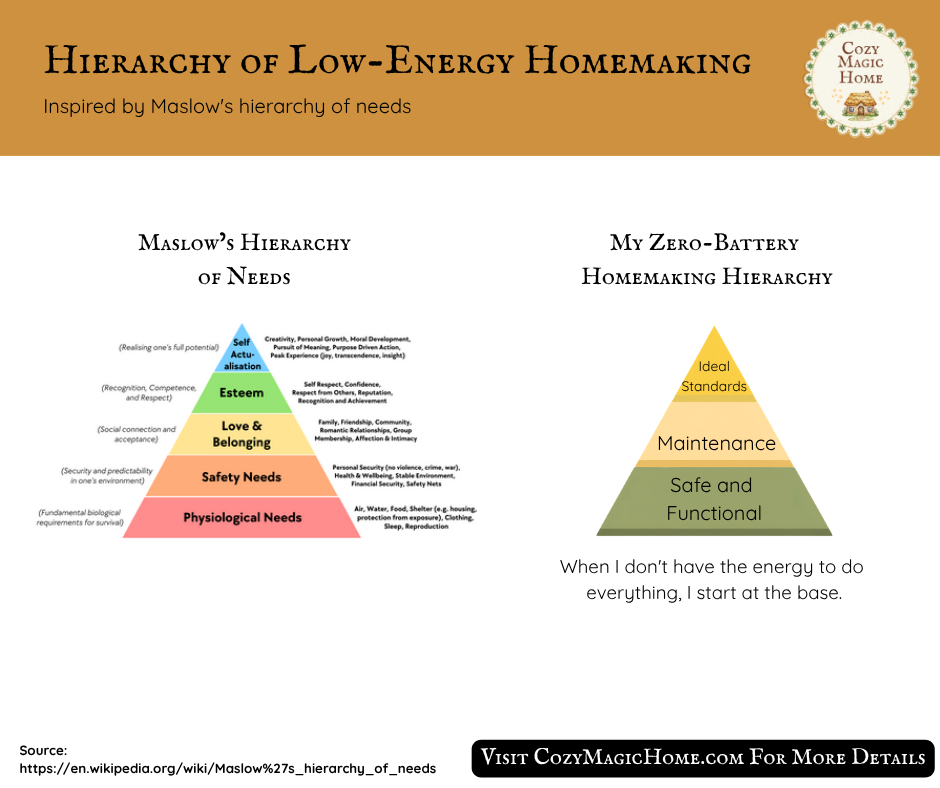
Here is how it ended up looking for my home:
Top Priority (Non-Negotiable)
- Physical Safety: Everyone in the house (including all living creatures) is safe.
- Basic Nourishment: Everyone gets fed, even if it’s minimal effort.
- Hard Deadlines: Work/education commitments, and taking out the trash if it’s trash day.
Medium Priority
- Visual Clutter: Clearing main walkways and seating areas to keep space usable.
- Laundry: Normally medium priority (unless you’ve run out of clean essential clothes, which happened to me once after my C-section. Not fun, do not recommend).
Low Priority
- Routine Cleaning Schedules: Deep cleaning, weekly resets, and monthly chores can all wait. (if you would like an idea of what mine look like, check it out here).
2. Create a Minimum Viable Home
The goal here is to create a functional home, even on zero-battery days.
To do this, go through to each room or space of your home, and decide on what the bare minimum standard would be to make that space functional.
For example, my kids bedroom floor would ideally be free of all their toys, but as long as they can get to their beds safely, and their bed has no physical hazards, I’ll get on their case about toy pick-up another day.
If you are the primary homemaker, note how I said what YOU would be okay with, not someone else’s standard.
If you’re primarily responsible for maintaining a space, you need to decide what “functional enough” looks like for that space.
For us, here is what it looks like in our home:
| Room | Zero-Battery Baseline | Ideal |
| Entryway | Free of trip hazards | Shoes on rack Floor swept |
| Kitchen | Dishes washed/in dishwasher Trash taken out Floor swept so food isn’t tracked | Same as zero-baseline Counters cleared Dining table cleared Floor mopped |
| Living Room | Somewhere to sit Free of trip hazards | Same as zero-baseline Floor vacuumed/mopped Books and toys organized Seasonal decor rotated |
| Playroom | Clear floor space to play Somewhere clear to sit | Same as zero-baseline Toys rotated Art work sorted Floor vacuumed |
| Hallway | Free of trip hazards | Same as baseline Floors swept and mopped Baseboards, doors, walls and light switches dusted and cleaned |
| Bathroom | Clutter free counter (my bathroom is small so clutter build up quickly) Restock toilet paper Clean hand towel | Same as low baseline Sink, toilet, bathtub cleaned Mirror cleaned Toiletries replaced as needed Floor cleaned Laundry dealt with |
| Bedrooms | Clear beds so you can get to them and nap, or go to bed | Same as baseline Floors cleaned Laundry put away Personal items put away in appropriate places |
Rooms to ignore entirely on zero-battery days (in my home):
- Half-bathroom
- Laundry room
- Office/workspace
- The yard (enjoying the yard is great, but zero yard work gets done).
3. The Zero-Battery Survival Kit
Here are a few habits I have adopted on zero-battery days to ensure I can keep my home functional:
Make the house functional
- Basket of Crap (get rid of visual clutter, sort out at a later time)
- Clear hazards
- No extra laundry (ideally none if you can get away with it)
Reduce tomorrow’s workload
- Paper plates/disposable tools if needed
- Easiest meals possible
Reduce your mental load
- Increased screen time
- Get outside briefly
- Comfort/mood boosters
Use energy only when it appears
- 3–5 minute micro-bursts
Optional Step
- Change your state, if it helps:
Clean lounge clothes, a shower, or simply brushing your teeth can sometimes help me feel more human.
If that’s not for you, pajamas are perfectly acceptable.
4. How to Reset After Several Bad Days
When you’ve experienced a string of low-energy days, the house can feel intimidating.
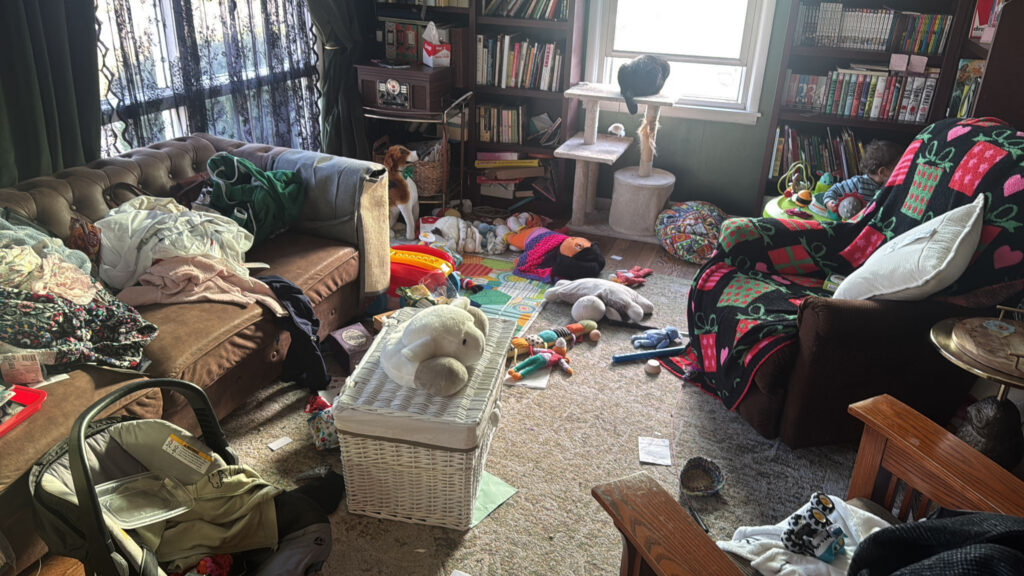
Ease back in gradually. Don’t respond to several low-energy days by trying to “make up for” everything in one exhausting cleaning session.
I have tried that, and it just adds to feeling overwhelmed.
But I do understand the need to get the house back to baseline. Here is what I do when I’ve recovered and am able to start doing more around the house again.
- Start where it bothers you most: Pick the single room or visual mess that is causing you the most mental distress and start there.
- Tackle the “Crap Baskets”: Work through the items dumped in your temporary baskets, setting a strict timer (e.g., 10–15 minutes) so you don’t overexert yourself.
- Return to your anchor routines: Revert to your regular rhythm (like gentle “hearth quests” or daily anchor tasks) one step at a time.
- Lean on your household team: Remember that homemaking isn’t a solo performance. My husband picks up slack, and my older child is old enough to take on age-appropriate chores. Ask for help!
Note: If you’ve had several bad days in a row and feel like you can’t break out of the rut, please consider talking to a doctor or healthcare professional. (Check out my Self-Care Article for direct links to low-income health resources and support helplines).
Crucial Note: Your Zero-Battery System Should Be Designed on a Good Day
Don’t wait until you’re exhausted to decide what matters.
Decide your non-negotiables when you have enough energy to think clearly. Write them down.
Then, when a zero-battery day arrives, you don’t have to negotiate with yourself while overwhelmed.
Homemakers Observation Journal
If you are the journaling type, consider this question for your homemaker’s journal (or just ponder about it when doing a mundane task):
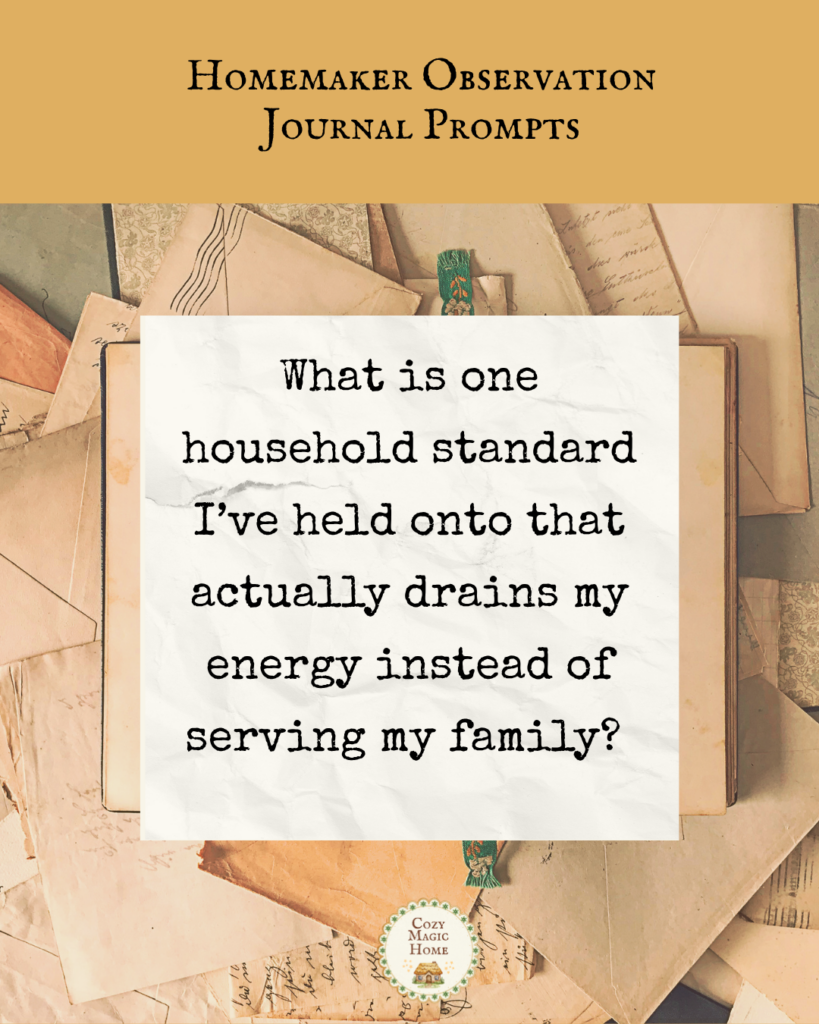
Feel free to share your answer in the comments below, or to email me at hello@cozymagichome.com. I love hearing from you all, and reply personally to all my messages.
Until the next magical mess,
Amrita