
You know is tedious? Storing and labeling every one of your kids toys, and then rotating which toys they have access to every 1-2 weeks.
And yet…
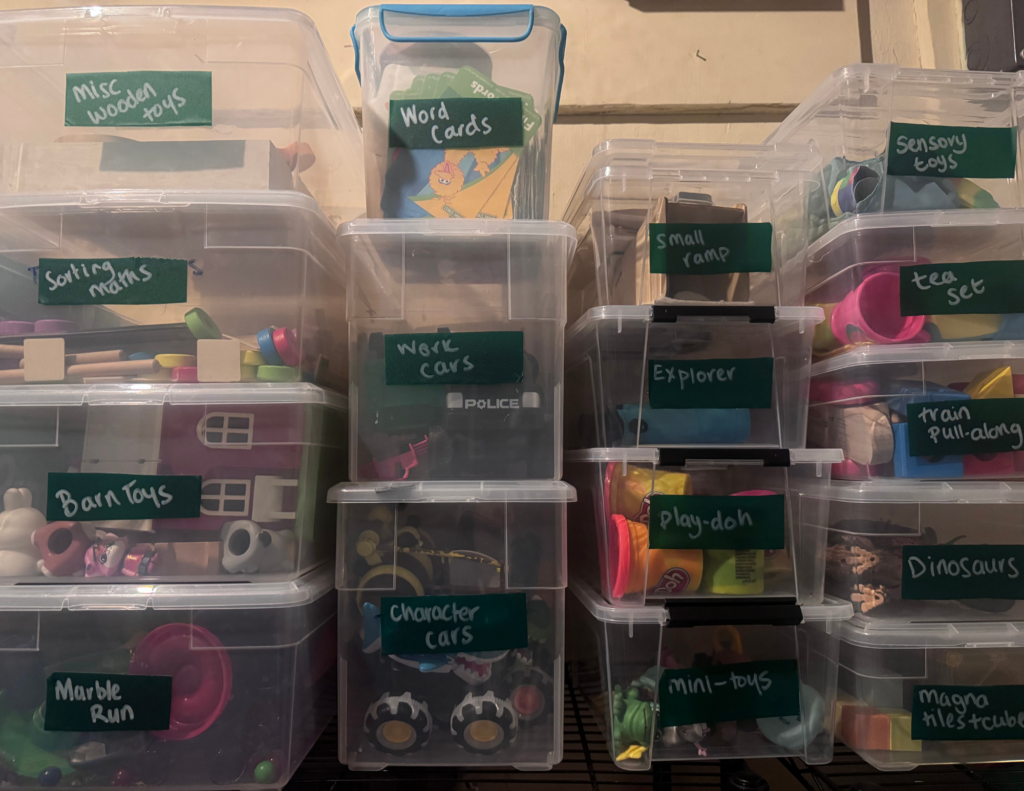
It is a system that, rather annoyingly, seems to be working in my household.
I say annoyingly because I have resisted it for so long.
But I swear upon all the Ladies and Lords, if I step on one more bloody Lego piece, or have to go hunting for the ‘blue car’ (which blue car?!?!?!) one more time, I will not be able to contain my rage.
So, instead of losing my mind, I decided the healthier thing to do would be to try a new system for toy storage.
Current Status and Goals
Usually, all the toys are kept accessible. I have tried to keep them organized in ziplock bags, but they still ended up looking like this.
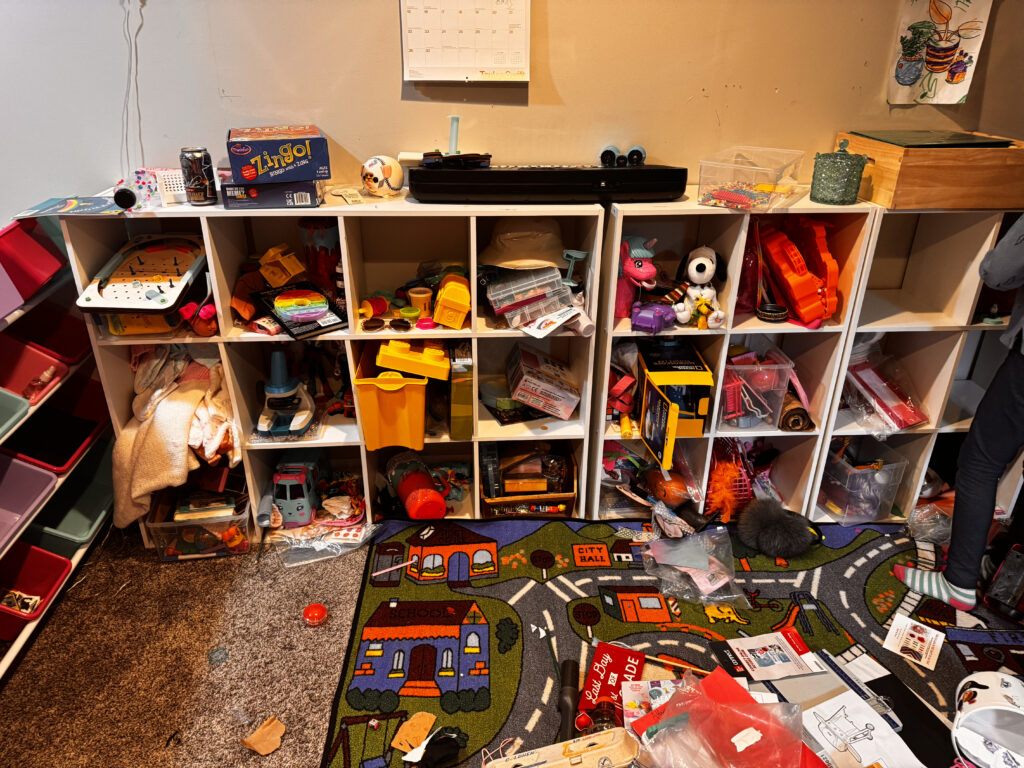
And despite my daughter telling me she likes how the above looks, and thinks it doesn’t need picking up, it isn’t safe, and is a visually stimulating nightmare for me.
Plus, with a toddler who is still learning about the world by putting everything in his mouth, this area feels like a choking accident waiting to happen.
Which, obviously, I will do everything to avoid.
What’s the evidence that toy rotation works?
I’d heard of toy rotation, and knew some basics about it, but wanted to know the science behind it.
And I didn’t find very much. Mostly Montessori sites talking about the benefits of it (here and here if you fancy a read).
The closest piece of evidence I could find was a study where they found that kids that were offered 4 toys played more creatively with the toys than those who were offered 16 toys.
Which makes sense to me. I’m a 42 year old woman, and just going down the cleaning product aisle can feel overwhelming (I always ask myself how many of these products I actually need), so having all the big, bright, sensory toys available to play with immediately is probably overwhelming to the littles too.
And based on that, I decided to see if I could replicate the finding of the study in my own home via toy rotation.
How I got started
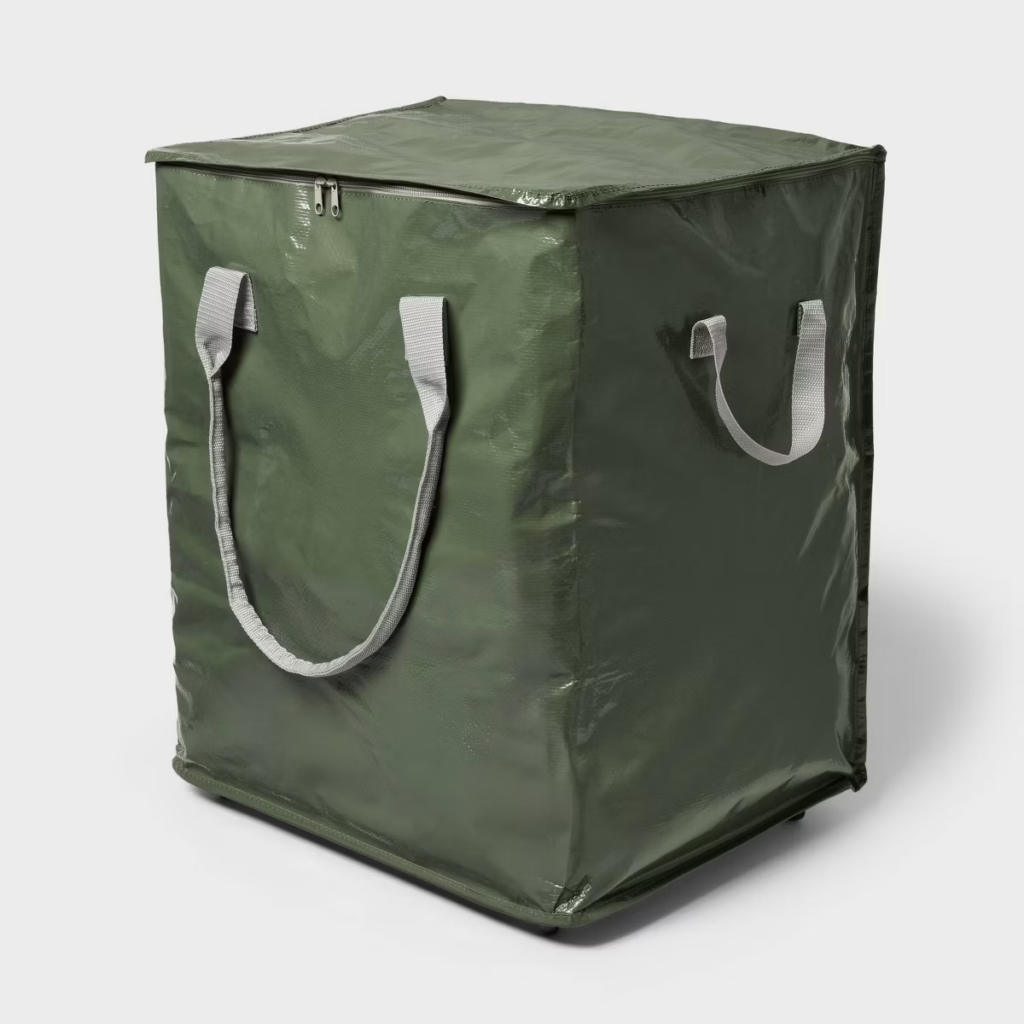
I collected all the toys I could find, and popped them into this rolling collapsible storage bag (Target $12). I liked that I could zip it up, roll it away for storage, and the kids couldn’t see into it*.
To keep the overwhelm at bay for myself, I then used a smaller basket, and only sorted through the smaller basket.
That way if I had to stop for whatever reason, my work flow didn’t feel like it was being constantly interrupted.
Sorting Criteria
Full toy sets were stored into these clear storage containers (link to container store).
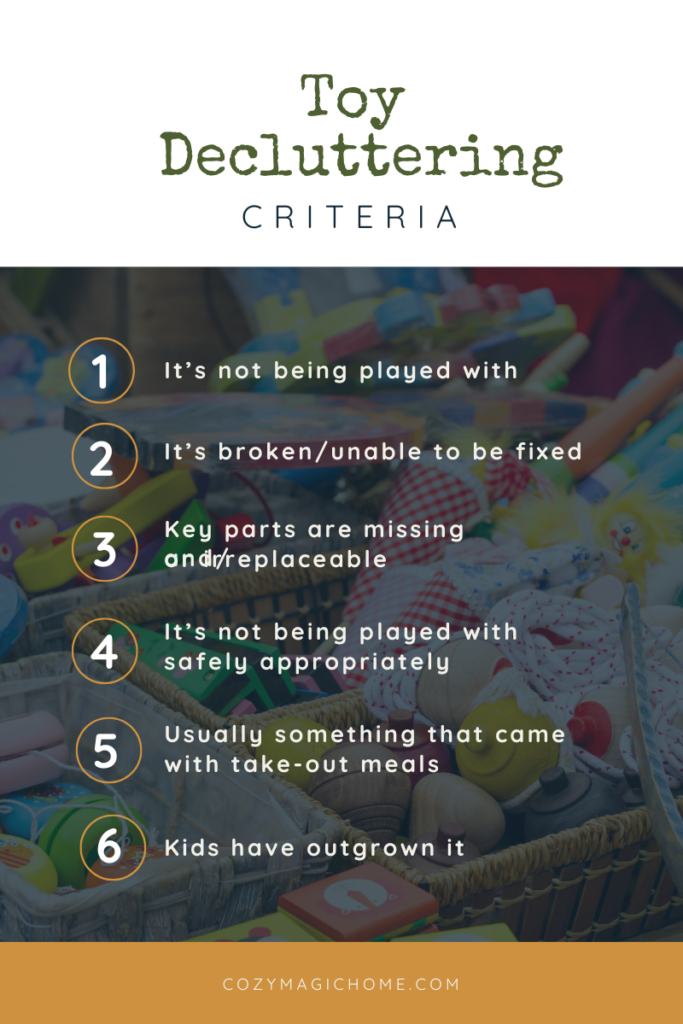
I also had a box ready for toys I knew I was going to send to the thrift store, and a trash bag ready for any toys we were going to throw away if they met the following criteria:
How to decide what toys to keep out?
With the exception of always having one car-related toy out (as my toddler enjoys cars), I don’t have a system. I’ve simply looked at a box and been like ‘hmm, that’s not been played with in a while’ and then pop that out.
Having said that, I might try to curate at least one seasonal toy set per week. It’s probably going to be D.I.Y. as I am not spending money on more toys right now.
How will the toys be displayed?
We have a knock-off version of the Ikea Kallax shelving, and will be storing one toy set per shelf. It will be stored in some colored trays and baskets I scored at a local thrift store.
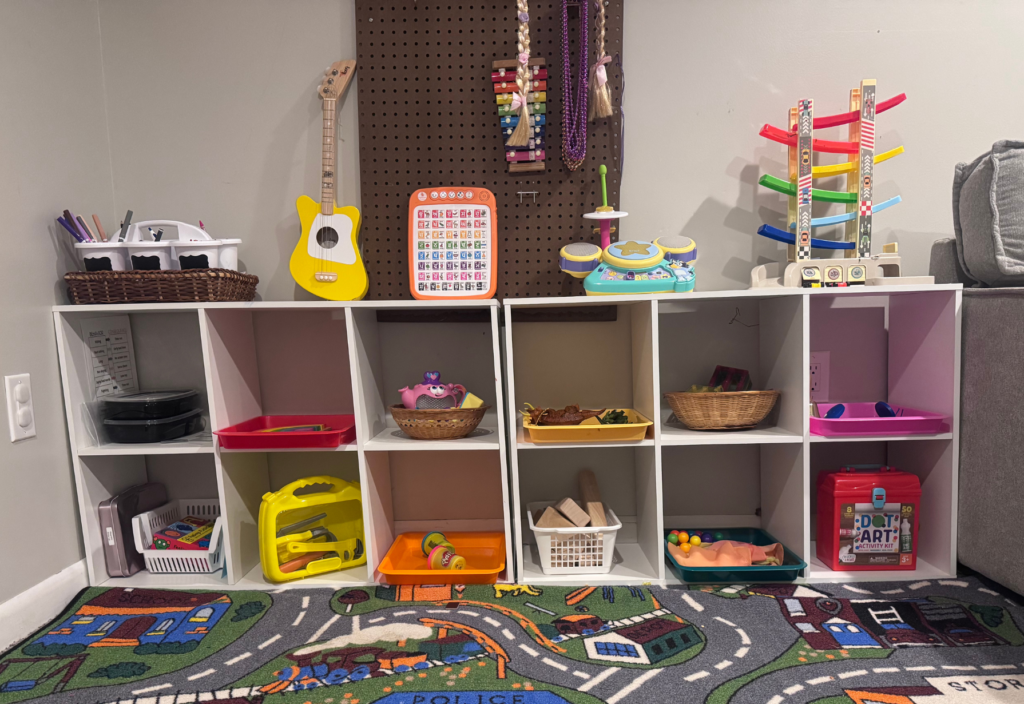
My reasoning behind this is to keep the overwhelm to a minimum. If they have to fish through a shelf to get to a toy they want, it’s probably got too many toys.
And I decided to use trays for two reasons:
- So they tray can be taken off the shelf and hopefully the toys can be somewhat contained (I know this is wishful thinking)
- To try and make clean up time easier. Hopefully saying things like ‘Let’s put this back on the red tray’ will help put things back in the right spot.
Observation Time – How I’ll decide if we are keeping a toy
Toys will be kept out between 1-2 weeks.
In that time, I will be looking for the following:
- How often is the toy played with?
- How is it played with?
- Is it appropriate for my kids current skill level?
My toddler is going through the ‘let’s throw everything off the shelf, just because’ phase of his life. So the toy simply being off the shelf might not mean anything.
In an ideal world, I would get their input too, but my kids have attachment issues with their toys, and absolutely ‘need’
It may take more than a month to get a true assessment of a toy, depending on how many toys you have, and how often they are being rotated.
Non-Rotating Toys – What we keep out all the time
We keep the following toys out all the time, but will be making similar observations to see how they are being used and amend them as needed:
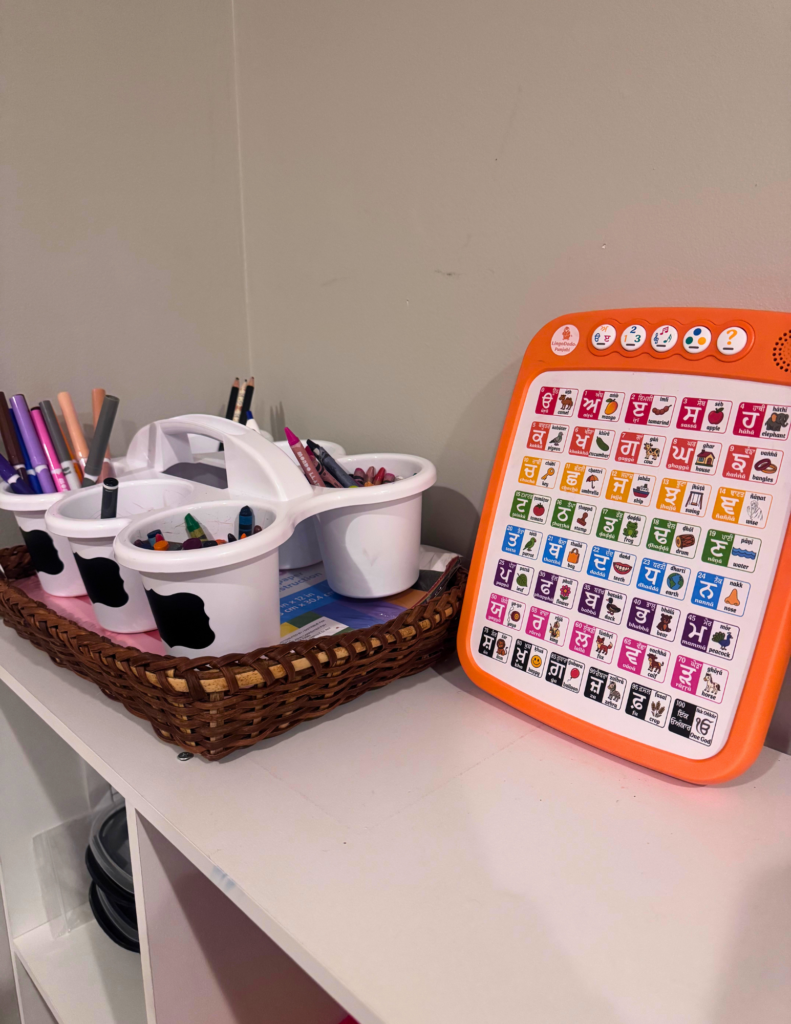
- Musical toys
- Punjabi Language Board
- Arts and Crafts supplies
- Car Ramp
- Bridge Board
- Lego set
- Sensory Toys
We also have a small selection of toys that we keep in our living room:
- Soft toys I’ve knitted
- Toy kitchen
- Mega Blocks
While writing this, I realized those toys are actually played with more creatively. So there might just be something behind that study.
Things I still need to work on
I want my kids to play with their toys creatively, but their shared play area and our family room has the only TV in the house in it. While playing, the kids inevitably end up asking to watch something.
Even though there are a plethora of studies on the benefits of reducing screen time for kids, sometimes, it is easier just to pop the TV on so I can have a shower, or drink a semi-hot cup of tea.
I’m hoping that having fewer toys will help them engage more with what is available, while I work on trying to figure out the best way to minimize our screen usage.
Benefits for the Homemaker
I’m giving toy rotation a try, not just for my kids, but for myself too.
As well as keeping the physical clutter and visual stimulation to a minimum, I’m also looking forward to not trying to keep up with cleaning twenty bazillion toys every week. Now that cold and flu season is coming up, I want to keep on top of keeping our family as healthy as possible.
Homemakers Observation Journal
What homemaking tasks can we simplify for the whole household? How might it benefit us?
Until the next magical mess,
Amrita
Leave a Reply