
It doesn’t take much for my routine to be knocked out of whack.
Recently, it’s my toddler’s sleep regression that has made me have more zero-battery days than usual.
And even though I know cold and flu season usually starts in October, when illness hits our home, it always feels like a chaotic time.
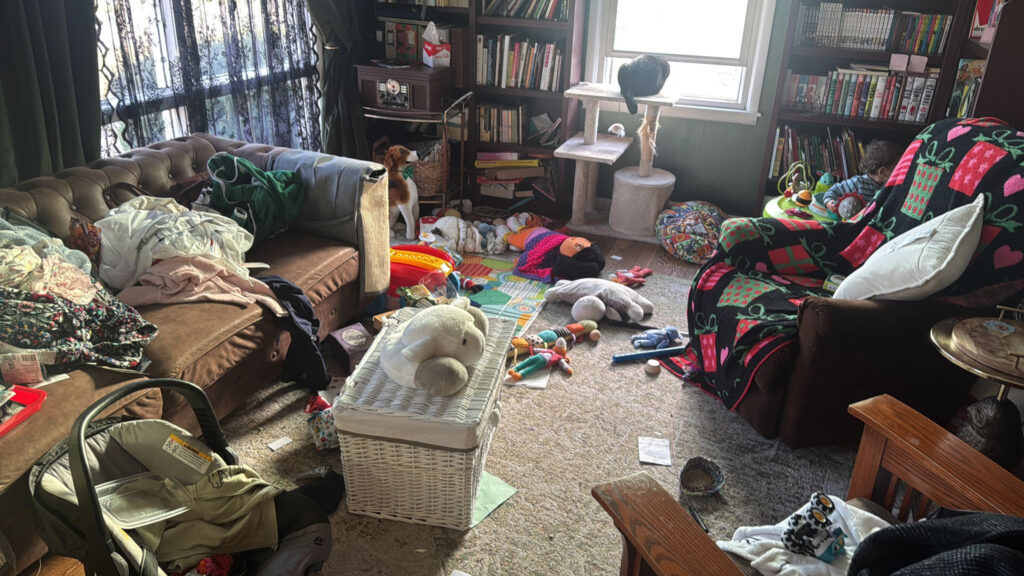
I might not even be the one who is necessarily sick (but as toddlers and school aged kids love sharing germs, I definitely catch that cold), but an illness in the home means my time and mental resources are prioritizing nursing the person who is sick back to health, while still trying to keep my home running smoothly, and manage the needs of other family members.
I’m keeping my fingers and toes crossed that illness doesn’t strike our home, but in case it does, I’ve decided to take a proactive approach.
Here is how I am preparing for the cold and flu season this year.
Preventative Practices
While my eight year old is now great at it, trying to get my toddler to engage with preventative practices is a comical endeavor.
Yet, I still try by doing the following:
Home
- Regular cleaning of high touch surfaces and items (e.g. light switches, door knobs, remotes)
- Improving air quality (opening windows when possible, cleaning air vents, maintenance of air purifiers and its filters)
- Role modelling and encouraging hand hygiene at key times (e.g. before eating, after messy play, after using bathroom)
- Creating this plan before illness hits our home

Outside of home
- Getting the flu shot
- If my kid has tried to eat a communal toy (happens a lot with toys at library and at children’s museum), we hand it in for it to be cleaned
- Trying to respect personal space (toddler is a nightmare for this)
- Keeping pacifier wipes at hand to wipe pacifiers and cups/straws if dropped
- Always having wipes and hand sanitizer available
Most importantly, if someone is showing signs of sickness, we stay at home to monitor the situation.
General Homemaking
Working from zero-battery plan
This year, even if I am not the one who is ill, I will be following my zero-battery homemaking plan if someone gets sick.
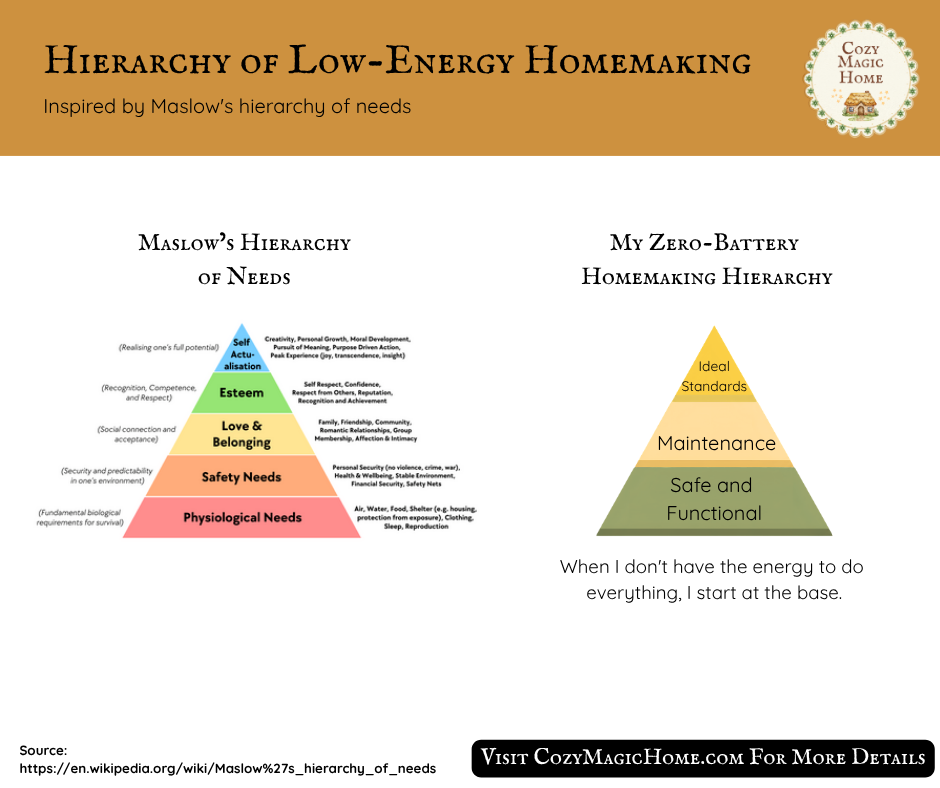
Collectively, our household will have reduced capacity if someone is ill, so instead of burdening someone to pick up the ‘slack’, I’d rather reduce our responsibilities so we can focus on healing.
For our household, this usually means doing some variation of the following:
- Circulating as much fresh air as possible
- Laundry baskets as temporary clutter holder
- Setting up a portable ‘traveling apothecary’*
- Take out or convenience meals
- Paper plates and disposable cutlery to reduce washing up
- Laundry as and when needed
- Groceries get delivered
- More screen time for kids
- Cleaning is focused on areas of the home where most time is spent
If you would like to make your own version of a zero-battery plan, you can check out this resource here.
*traveling apothecary – is a basket with key items in it (e.g. medication for kids, thermometers, portable humidifier etc) that I take around to wherever we are hanging out on sick days, so all essential items we need are in a central location, and easily accessible. See heading ‘Tools and Supplies (a.k.a Our ‘Traveling apothecary’)’ below for more details.
Emergency Numbers
Inspired the only real adult in our family (hey Aunt Cindy!), I’m making a list of numbers we may need during an emergency (amend your list as needed):
- Local Urgent Care
- Primary Care Provider
- Pediatrician
- Local/24 hour pharmacy
- Nurse Advice Number (available through some insurance plans)
- Poison control (1-800-222-1222 )
- Kids current weight (more on this below)
Hopefully we do need to contact one of these services, but if we do, I’m sticking them on the fridge, a location where they will be accessible to everyone (so they don’t have to ask me), and keeping them in our ‘traveling apothecary’.
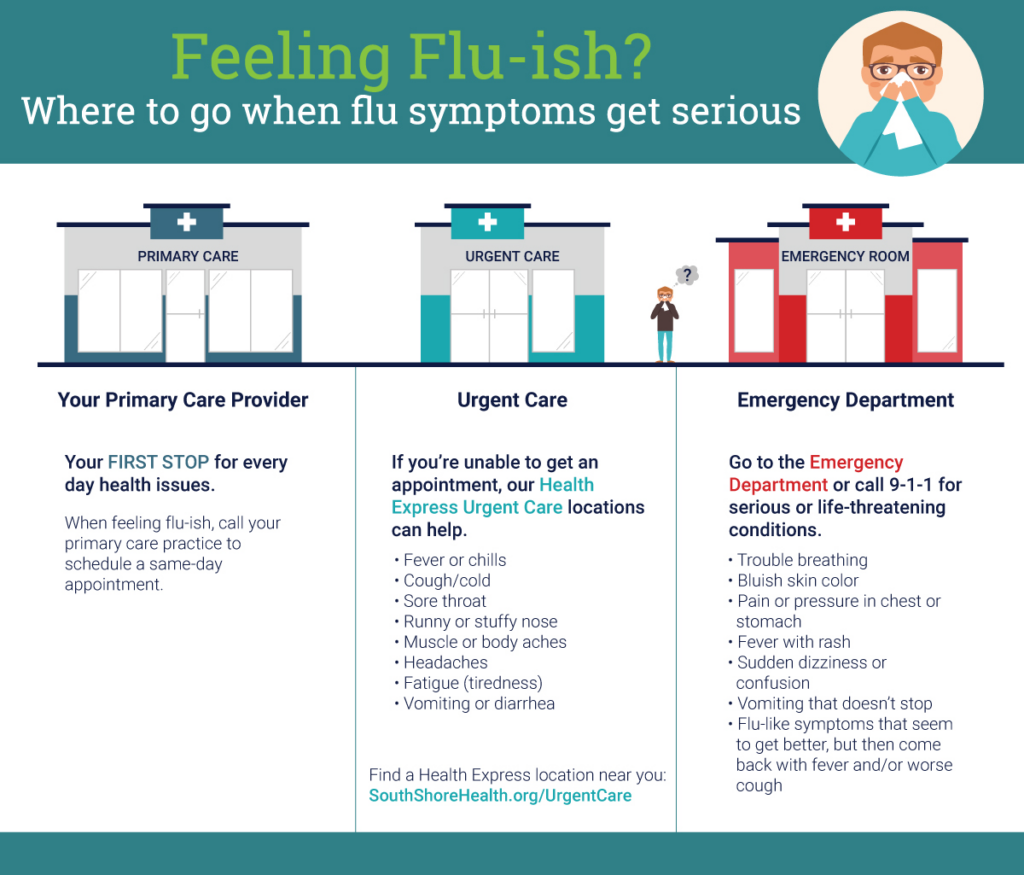
Though the below guide is by South Shore Health (MA, USA), I found it to be a helpful guide about when to call services (though if you think something is not right, contact your medical provider):
Kids Current Weight – While strictly speaking, my kids’ current weight is not an emergency number, due to their age, the amount of medicine they take is dependent on their weight.
Having that number up in where anyone can see if is helpful when:
- Checking how much medicine to give them
- If we need to call one of the services and they need that information
Please check with your Doctor/medical provider for dosing requirements, especially those for children/vulnerable adults.
Laundry
Instead of doing my 1-2 loads of washing, drying, and folding laundry a day, laundry will get done as and when needed.
In fact, if someone has had the flu or common cold, I usually use the washing machine as a ‘laundry basket’ and start the washer when it’s full (maybe sooner, depending if bodily fluids are involved).
Personally, I add laundry sanitizer and color catcher in addition to my usual detergent, and wash and dry everything on a hot setting.
Also, once dry, the laundry can live in the basket for as long as needed.
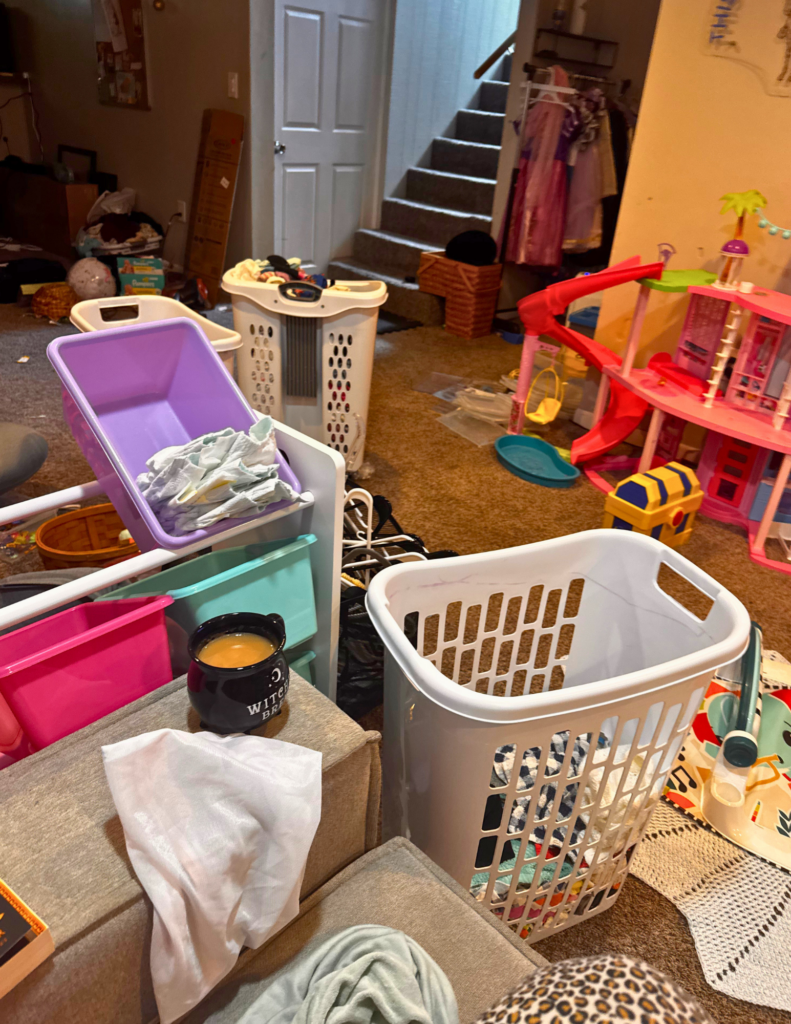
(note: depending on the illness in your home, you may need to launder the person who is unwell laundry separately from the rest of the household. Check with your healthcare provider to see if you need to do this).
Food and Drink
I have more pantry than freezer space, so I stock up on:
- Soups
- Broths
- Crackers
- Applesauce
- Teas
- Pedialyte Powders
- Individual snacks packs
I also will not think twice about getting take-out during this time.

My goal is to make sure my family is fed. I care much less about how I’m sourcing their meals at this time.
We all also have individual refillable water bottles that are kept topped out throughout the day.
Having said that, I make sure to keep pedialyte popsicles for the kids in the freezer.
Cleaning
I’m trying to adopt more eco-friendly homemaking practices, and typically use homemade cleaners and old rags to keep our home clean.
But during bouts of illness, I am focused on making things as convenient as possible.
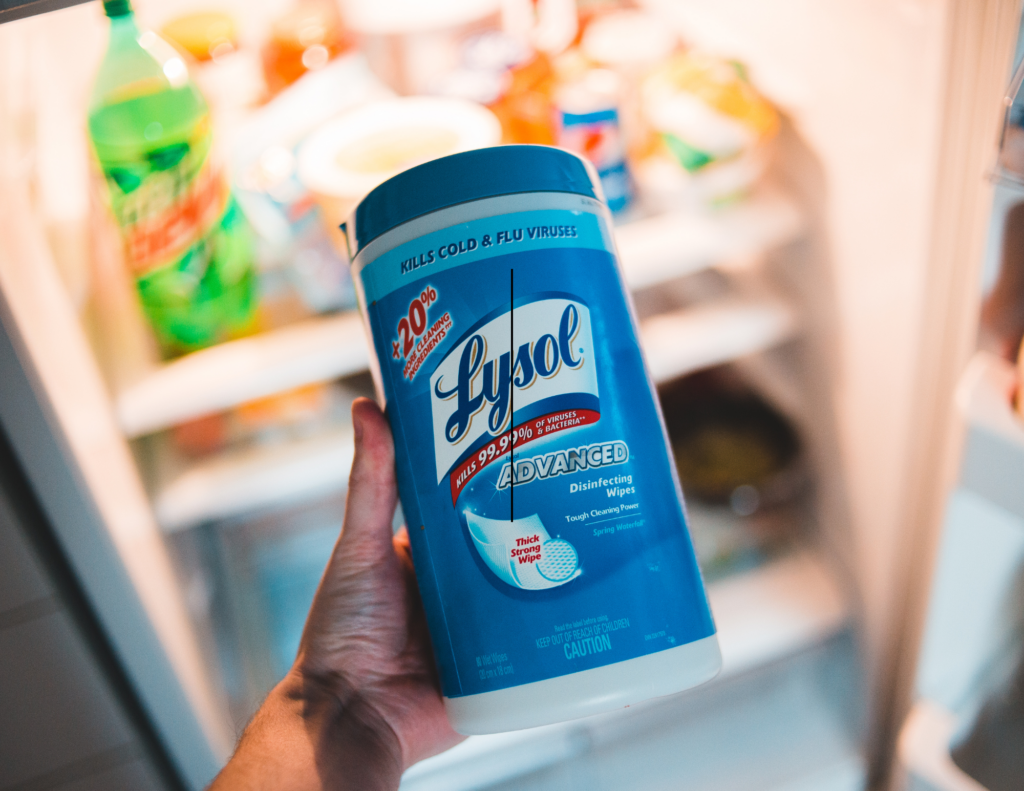
So I rely on the following type of products (I’m not really brand loyal) to make sure we keep things clean:
- Paper Towels
- Pine-Sol
- Bleach
- Disinfectant spray
- Disinfectant wipes
- Cleaning wipes
- Dish soap
Tools and Supplies (a.k.a our ‘Traveling apothecary’)
Last cold and flu season, we couldn’t find our thermometer, and ended up having to pick one up from Walgreens for around $60.
It’s a great thermometer, but it was annoying to have to spend a fair amount of extra money, especially since we found our thermometer the next day (it had slipped under the crib, and we hadn’t noticed).
So now, as well as making sure we have these tools, they are stored in a specific location so we do not have this issue again.


The tools we have found to be helpful in this season:
- Humidifier
- Thermometer
- Nose Aspirator (the bulb works fine, but we were gifted an electric one with our last kid, and I love that thing)
- Dedicated sick bucket (in case we don’t get to bathroom on time)
- Dosage Syringes
- Dosage cups
- Basket to hold these things, in case we need them in the same room as us.
- Extra toilet paper
- Extra facial tissues
- Gentle face cream (just in case tissues end up being too much)
- Lip balm
Medication
This will vary from household to household, person to person, and it is best to check with your Doctor what medication is best suited for your situation.
I’m sharing my list just to share what I find has personally helped us.
- Getting the flu shot
- Acetaminophen (kids and adults)
- Ibuprofen (kids and adults)
- Day/Night Quil (not for toddler, check label to make sure you aren’t mixing with other meds)
- Saline nasal sprays (one for each kid)
- Lozenges (not for toddler)
Please check with your Doctor/medical provider for advice around what medication is most appropriate for your household members, especially those for children/vulnerable adults.
For Your Household
While our preparation can’t prevent illness from crossing our threshold, if someone in your household does get sick, having an action plan means you can save your mental resources and energy on focusing on your household’s immediate needs.
Having said this, each household varies, as does the needs of every person. What works for my household may not work for yours, so feel free to use my plan as a starting point to create your own.
Homemaker’s Observation Journal
What is the first thing to break down in your homemaking routine when illness strikes in your home? How can you prepare for it this season?
Until the next magical mess,
Amrita