
I like to think that as a parent, I am giving my kids the best I possibly can.
Beyond meeting their basic needs, I try to support them in their interests, and expose them to as many experiences as possible with the intent that they can live this life to be the best versions of themselves.
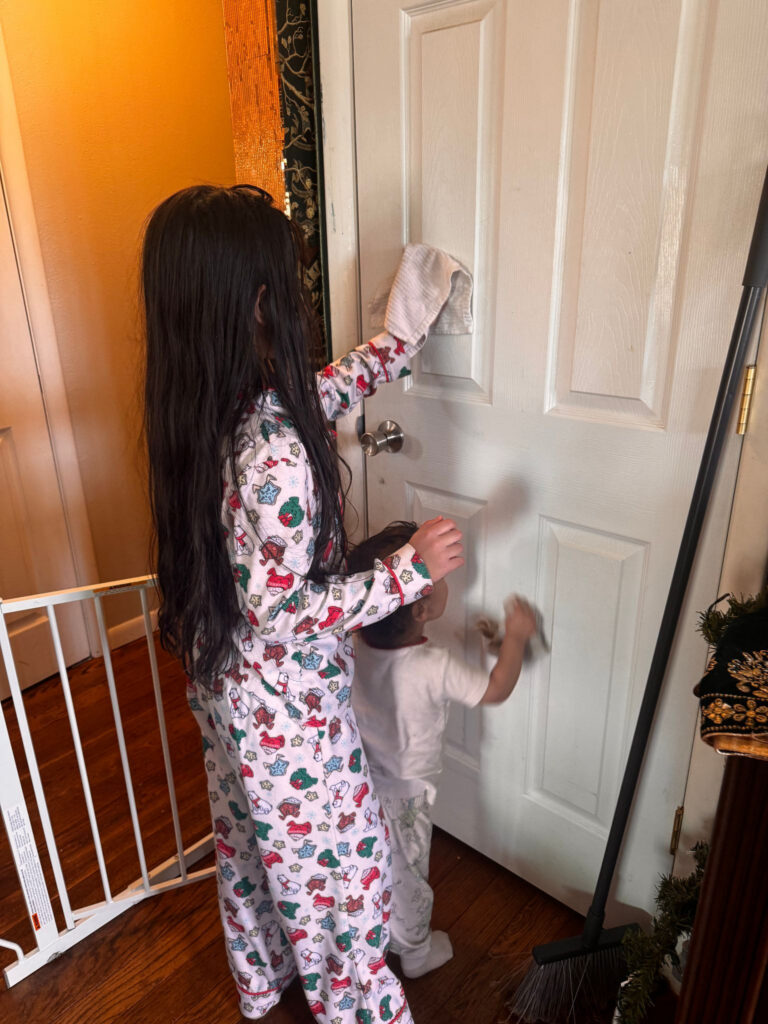
One thing I admit I have been guilty of, however, is not getting them to be consistent with chores. Partly because it is easier and quicker for me to do it.
I also realized when I asked kids to clean up, I was always asking them to help me. No wonder my eldest has said she believes cleaning is ‘Mommy’s’ job.
It certainly is not (even though I admittedly enjoy it).
Things had to change around here.
What we’ve tried so far (without success)
As this blog is evidence of, I’m trying multiple approaches:
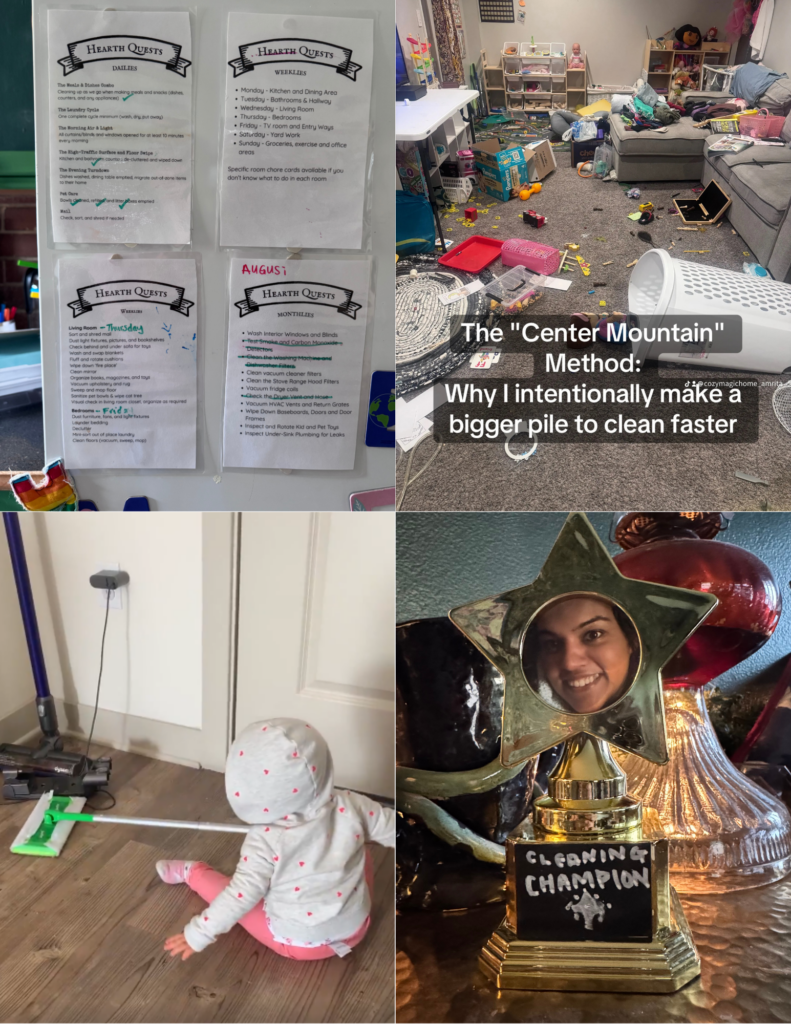
- Gamifying chores is working well for me and my husband, but since school has re-started, my daughter isn’t as interested, and the toddler has no clue what is going on.
- I’ve tried gentle parenting (not quite right for our household)
- The Center Mountain Method, where I throw all the clutter in the middle of the room and sort through it in a central location (daughter gets overwhelmed with the huge pile)
- Sitting in a room pointing to everything my daughter needs to clean/pick up (exhausting for me).
So yeah, sometimes I’m just like ‘oh sod this’, pop on a podcast and clean everything myself.
And it solves the immediate issue (the room gets cleaned), but what are the long-term repercussions of this choice?
Why ‘Getting It Over and Done With’ is not better
A study by Tepper et al. (2022), in the Australian Occupational Therapy Journal looked to see if there is any correlation between children participating in household chores and their cognitive abilities. They studied the habits and practices of children aged between 5-13 years old (survey based) and found that children that do participate in household chores:
- Have stronger working memories and inhibition
- Practiced different types of executive functioning by engaging in different chores
They also noted a range of settings where children can practice executive functioning skills (it was occupational therapy focused), but engaging in self-care and household chores at home provided a low-cost way for parents to support their children’s cognitive development.
Taking this into evidence, I’m doing my kids a huge disservice by not encouraging more involvement in household chores.
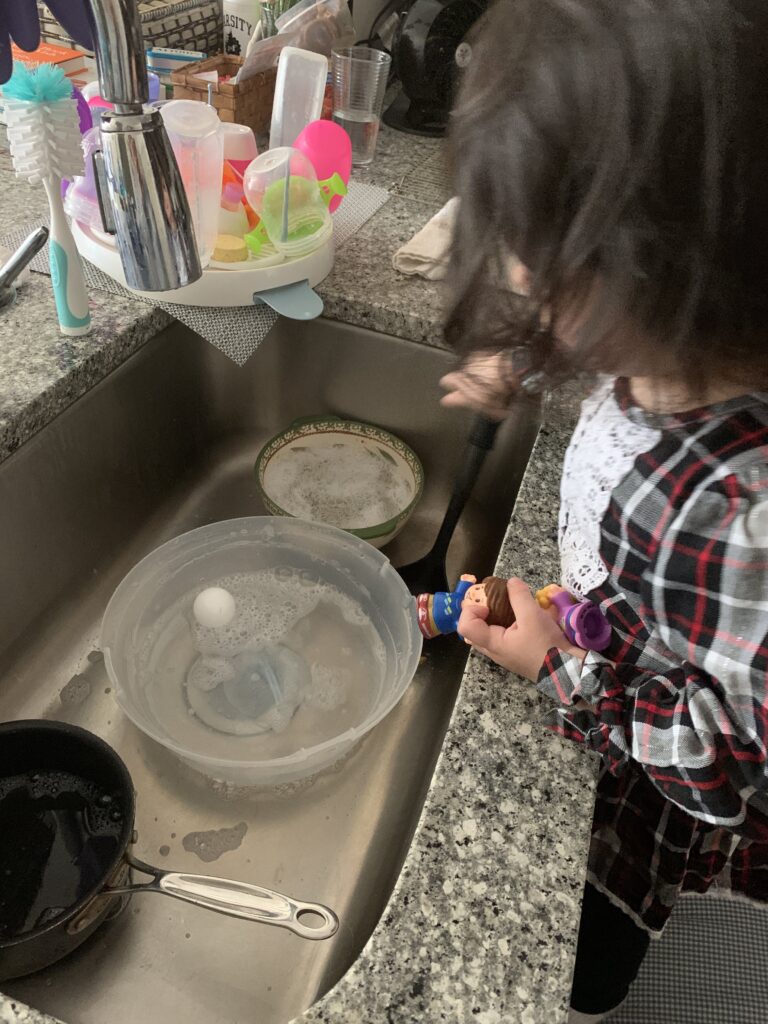
By taking over, the whining stops and things get cleaned to a standard I preferred, but they are missing out on an opportunity to develop essential skills.
A Family Meeting
I spoke to my husband to make sure we were on the same page, and then had a chat with my eldest. Spoke to her about the importance of being in charge of her own space, and that she needs to be responsible for her own room.
She stated plainly she doesn’t know how.
I offered the breakdown of the cleaning list of the bedroom, which she said she can read, but finds a little boring.
And as I’m constantly looking for ways to adapt homemaking to way I process things, I thought it was only fair I do the same for her.
A Visual Solution
Harking back to my days as an RNLD (Registered Nurse of Learning Disabilities, read more about this type of nursing here), I decided to try a visual checklist.
It was partly inspired by the PECS (you can read more about the PECS here) but to quickly summarize, it allows the user to effectively communicate their needs via simple pictures.
I saw how it made a difference in the lives of the clients I used to work with, and though my daughter is not neurodivergent, I wondered if a visual aid might work better for her.
(NOTE: What I’ve created is not an adaptive communication model. I simply used PECS as inspiration for a visual checklist).
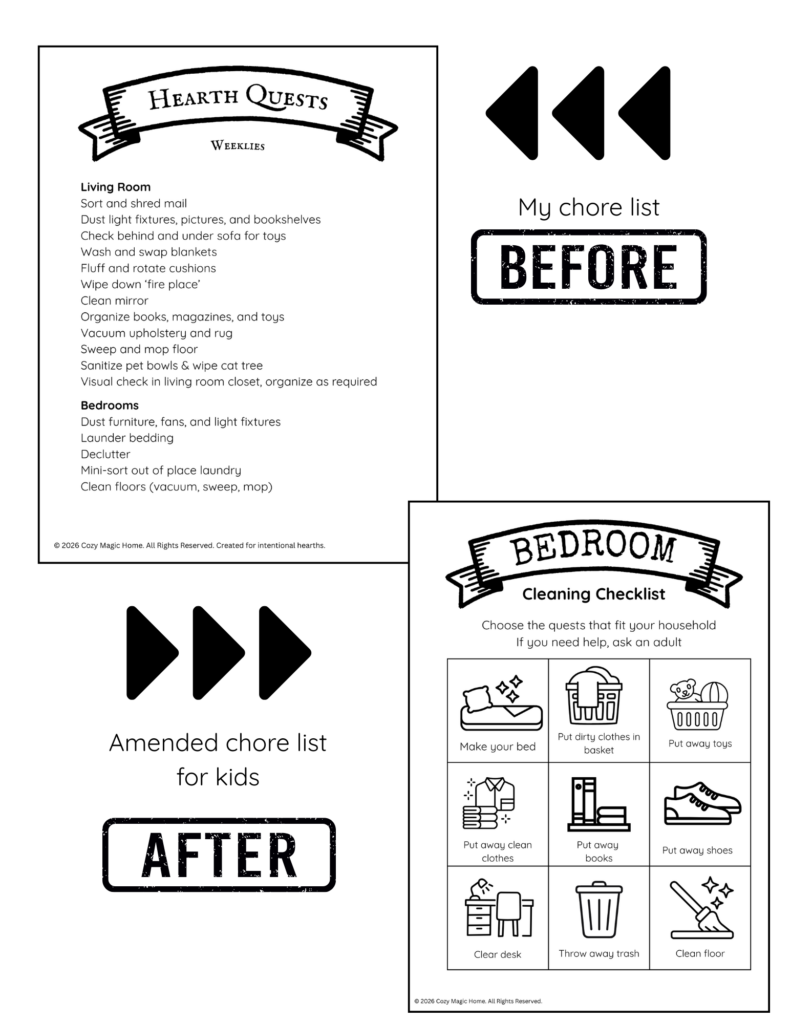
We did find a few on Etsy, but nothing that quite matched the design my daughter wanted, or all the chores I wanted to include.
So I popped on Canva and made my own version. And then because I was having fun, I decided to make a fantasy innkeeper themed one, which I’ve included below.
VISUAL CHECKLIST
Please note I have intentionally kept the chores vague and open ended so it can be adapted to your household.
And even though the goal is independence, there are probably some household chores that kids should have adult supervision with. I also want anyone using this comfortable asking for help. So each checklist includes the phrase ‘If you need help, ask an adult’.
Benefits of this approach
- Teamwork: As we created the checklist together, it felt less like ‘adult vs kid’, and instead how we could work on together.
- Less Complaining: Is my elder daughter now magically cleaning her room, and participating in household chores without complaint?
I wish. There is still a fair amount of complaining.
But there is less complaining.
I can use the list to say ‘hey, does this look like your desk has been cleared?’.
She’ll grumble but agree (as we put it on the list together), and then completes the chore
to the best of her ability.
- Clear expectations: As we created her personalized checklist together, clear expectations were set for both of us. She knows what I expect when I say ‘clean your room’, and I’m aware of her capabilities and limitations.
- Reduced dependence on adults: As she has the checklist, if I ask her to clean a room, she is less reliant on me to tell her what to do.
- Active Participation: If there is a chore listed on the chart and she sees it needs doing, she will do it without being prompted (not every time, but still a massive improvement).
Things we are still working on
Does she get everything perfect? No.
It has been great to get an idea of what she does know, what she needs to still learn, and chores she just hates and avoids.
As for my part, I still have a lot of learning to do.
For example, while I would like to get everything done in one go, she likes taking lots of breaks.
We’ve worked around this by setting time limits (e.g. get X room clean before dinner). As long as it gets done within the set time, there are no consequences.
But I mostly need to adjust my expectations. Of course an eight year old is going to have very different ideas of what ‘clean’ looks like, so I’m trying to embrace functionality more so than my version of ‘clean’.

It can also be difficult teaching her how to do certain things, because while she needs my help, she also wants to be independent and do everything herself.
We’ll figure it out eventually.
But I’m mostly happy she is participating in maintaining the household with less input from me.
How we make it fun
I’ve been trying to let her take the lead (it can be hard for me), but letting her add as much of her own interests as possible.
We’ve been cleaning a lot to the KPop Demon Hunters soundtrack.
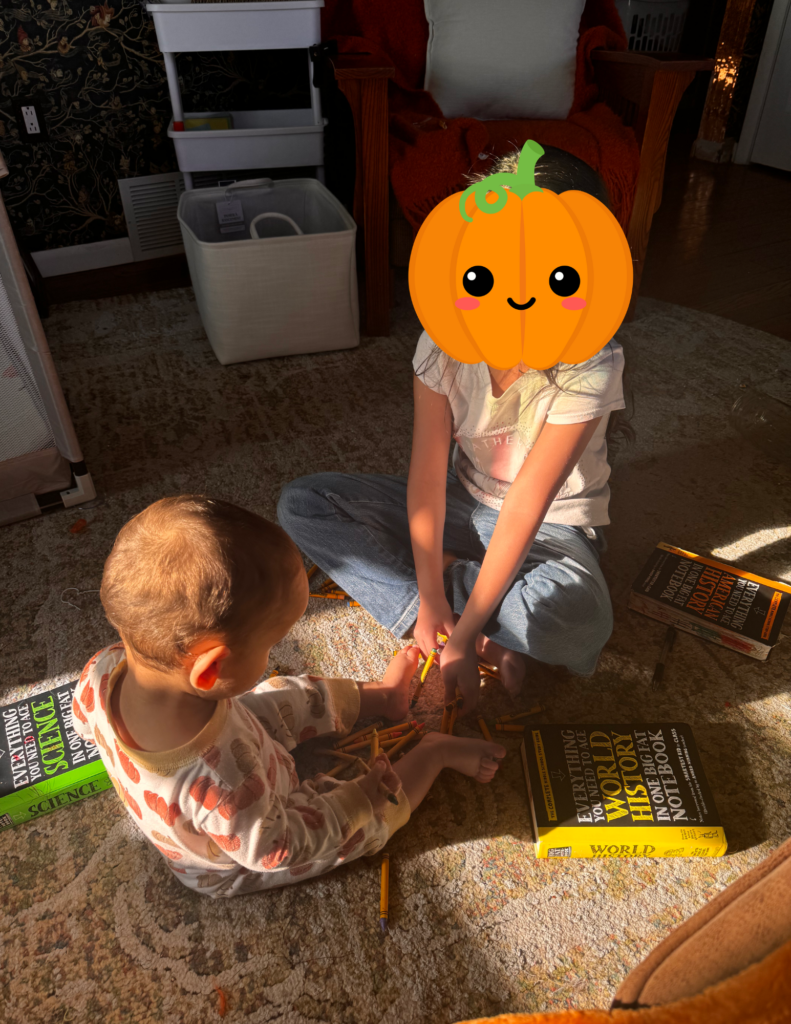
My daughter likes setting up a play scenario (like we are cleaning because her favorite YouTuber is coming to visit) and assigning characters. I struggle with that element, because I apparently know nothing about YouTubers (very true).
Our checklists have also been laminated, so my daughter can cross off the chore after she has done it (she really likes dry erase markers).
Taking responsibility doesn’t mean doing everything alone
As a parent, I want my kids to become responsible, independent adults.
But that doesn’t mean doing everything alone from the get go.
I want our home to be a safe place for them. And that means creating a home they can get things wrong, multiple times, and still feel comfortable to try again.
As important as our homes are, the stakes are much lower here. Much lower than at school, or a future job, or even being an adult. Forgetting a chore around the home isn’t as big a deal at home, making it the perfect place to practice.
Even though things feel slower, messier, and so much different than I would do it, I’m trying to help her in a way where she takes the lead. I want her to feel completely comfortable asking for help. I’m 42 years old, and I still struggle asking for help. It is a skill I hope she learns and embraces much sooner than I am.
Household chores at a young age are a great place to start. It encourages:
1. The acquiring and practice of new skills
2. Learning how to be responsible for a space
3. Independence in performing those tasks
But that doesn’t happen by just telling your kids to clean their room (believe me, I’ve tried that too). It happens by letting them know the adults are still around, adjusting expectations to fit their skill and age, stepping back when they’ve got it, and stepping in when they need help.
I hope this checklist helps you and your family on that journey too.
Until the next magical mess,
Amrita
Leave a Reply