
A Golden Rule of Nursing (and surprisingly, Homemaking)
In my former life, I was a nurse. There was a golden rule we had about note-taking: ‘write it down, or it didn’t happen’.

Surprisingly, I’ve found it has become a maxim for me as a homemaker too.
Because it appears that until I started making a record of everything that was getting done around the house, I simply didn’t realize all the work I was doing.
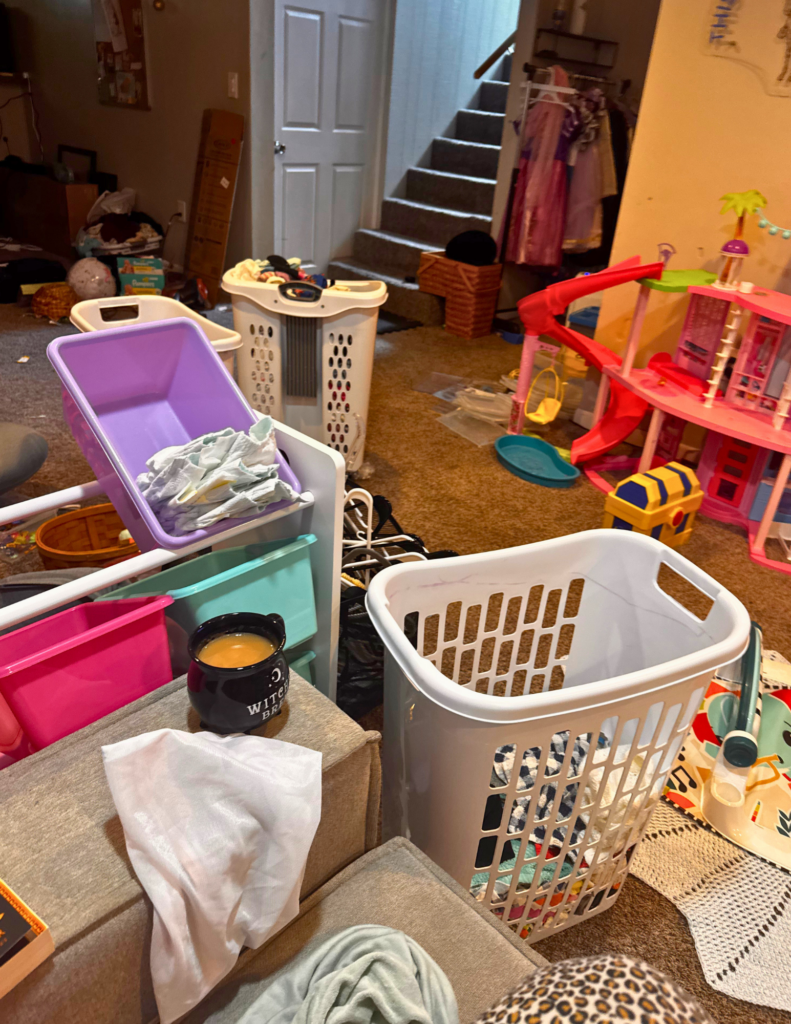
It’s so easy to get caught up in the visuals.
The dusting, the dishes, the smattering of Lego’s your kids have sprinkled everywhere.
And that never ending mountain of laundry.
The visual stimulation of a house that needs cleaning can feel overwhelming. It is understandable that you would look around and think ‘why can I never catch up?’
But I am willing to bet you have done so much more than you realized.
The Comment That Changed My Perspective
Back in March, I wrote this blog post about How Many Cleaning Products Do You Really Need?, and someone wrote this in the comments:
‘I started writing down one thing at the end of every day — what I actually managed to do. Not a to-do list, not plans. Just one small win. It’s surprising how quickly it shifts your perspective.’
It changed my perspective before I even started doing this as a regular practice.
My resolution for this year (2026) was to treat homemaking as a big experiment, in the hopes of becoming a better homemaker, and to stop being so judgemental towards myself and my supposed lack of process.
And until that comment was made, I was assessing my progress by what I saw at the end of the day.
It was frustrating.
Yes, I got the kitchen sorted after dinner, but the stairs hadn’t been swept, clean laundry was sitting in a basket that we’d started using as a pseudo-wardrobe, and I couldn’t remember the last time I’d mopped.
I was looking at everything that hadn’t happened.
I was at home all day. I felt like a failure.
But that one comment made me start thinking… maybe I do actually get more done than I realized.
The only evidence I had was what I saw at the end of the day.
And so, the Homemaker’s Observation Journal was born.
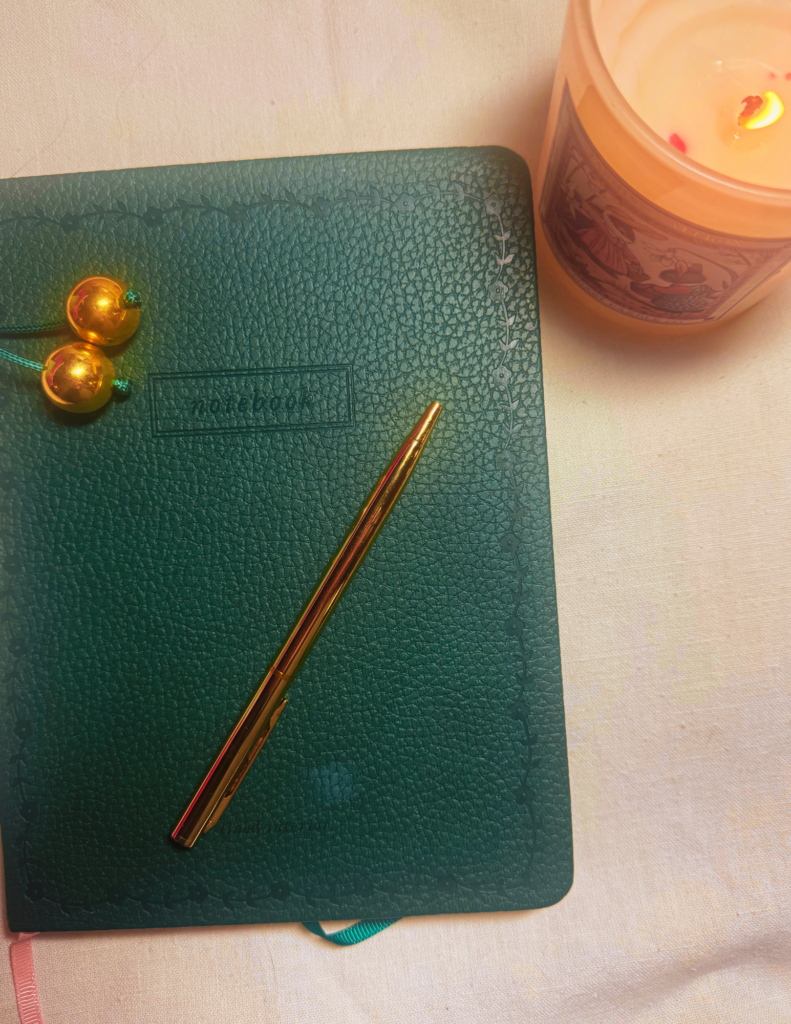
Collecting the Objective Data
The reason why the journal was started was simple. I needed evidence beyond what I saw at the end of the day.
After a few weeks of tracking, here are some things I observed:
Things that always got done:
- Home-cooked meals for a majority of the week
- Clean laundry
- Cat care
- Clean up post activities for kids
- Post dinner kitchen clean up
- Floor swept in high traffic areas
Areas we needed to work on:
- Stairs rarely swept
- Laundry didn’t get put away until basket was needed
- Dishwasher seemed to always be full of clean dishes
- Shoes in a pile at entry way
- Bathroom only got cleaned when it got pretty icky
- Mopping rarely done
Writing out these observations also made me consider the context of homemaking taking place.

My primary ‘job’ is a SAHM, but I’m going to argue that homemaking is an entirely separate profession. While being the primary caretaker of my kids, I was doing the lion’s share of the homemaking (my husband works full-time and mucks in when he isn’t working). At the time, my son had just turned one and was sleeping poorly. I was experiencing some health issues, and was getting very little sleep. Our homemaking routine was set up so I did most of the work, or did all the delegating.
I was physically and mentally exhausted. It made me appreciate having external evidence even more. Yes, there was a lot that needed to be done around my home, but I was also kicking as much homemaking butt as I humanly could.
Writing it down meant I had the evidence for it.
What the Data Taught Me (Fixing the System)
What the observation log taught me
- I was doing more than I thought.
- I could see patterns in my energy.
- I could identify what consistently wasn’t getting done.
- I could see where the timing of tasks was creating unnecessary pressure.
- I couldn’t rely solely on what was visible at the end of the day.
- My homemaking system was too dependent on me.
- Having a record made conversations about household responsibilities more concrete.
The Detailed Version
As well as being kinder to myself, recording what was getting done around my home helped me to establish some key patterns that have really helped me create a homemaking system that works for me.
For example, I was able to start recognizing my energy patterns at certain parts of the day or week, and started to work with my energy, instead of forcing myself to do more.
I also realized that starting laundry during naptime meant I was scrambling to try and put away laundry, start dinner, and do the school pick up all around the same time. I also tried to start multiple loads of laundry a day. I played around with different schedules, but settled on starting laundry in the morning, folding and putting away at naptime, and limiting myself to one load a day during the week.
Another key takeaway I took from the data was that the current homemaking system was not sustainable for me. I still don’t mind doing a majority of the work, but I want a system where we all participate, not just rely on one person.
It led to some lovely, honest conversations with my family, especially my husband. As I had objective data, the tone of the conversations was less accusatory and more ‘hey I’ve noticed this pattern in our homemaking where…’ and then we would discuss the particular issue. Brainstorming a solution together, instead of me trying to cover it with a band-aid while trying to do ten other things.
Overall, keeping an observation log taught me that I cannot solely rely on what I see, and how I feel. Having the objective data meant I no longer had to figure it out, that I could observe patterns and behaviours and take it from there.
Not writing it down won’t make all your work disappear. But taking a moment to record what you’ve actually done can make invisible work much easier to see.
How to Start Your Own Homemaker Observation Journal
If you want to start your own journal, but are unsure where to start, consider the following about your home:
- What does the household naturally do?
- What gets done without prompting?
- What repeatedly gets avoided?
- Where does clutter naturally accumulate?
If you are new to journaling, these can feel like pretty big/heavy questions, depending on your household situation. Feel free to be as detailed (or to the point) as you want.
This is your journal, so you are in charge!
A Free Tool for Your Journey (The Freebie Printable)
To help you get started, here is a free observation log for your journal. Make it as detailed or simple as you want.
The goal here is to gather proof that you are showing up for your home, and to start observing your natural rhythms. From there, we can figure out if you want to keep them or tweak them to fit your goals.
Print as many copies as needed, or copy the headings into your own notebook:
Before You Go
How do record what you get done, or do you prefer to tick things off from a to-do list? Let me know below or email me at hello@cozymagichome.com I love hearing from you, and respond to all my messages!
Until the next magical mess,
Amrita